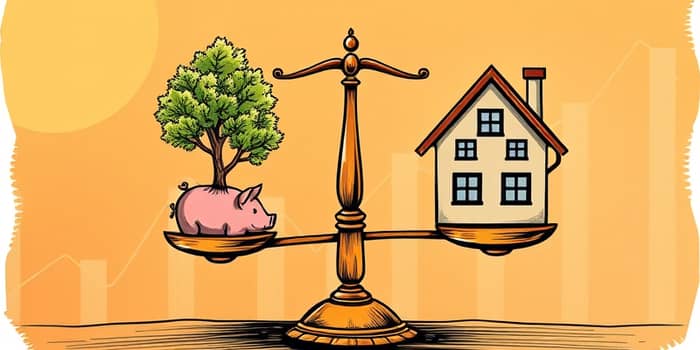
Interest rates govern the relationship between lenders and borrowers, serving as both the cost of borrowing money and the reward for saving it. This vital mechanism influences everyday decisions, from taking out a mortgage to setting aside funds in a savings account. As central banks adjust benchmark rates, the ripples extend across credit cards, auto loans, certificates of deposit and more, shaping personal budgets and national economic health.
In the United States, the Federal Reserve sets the federal funds rate, which acts as a reference for a wide range of lending and deposit products. Changes in this benchmark rate can lead to shifting yields on certificates of deposit, fluctuating mortgage rates and evolving returns for savers. Understanding these dynamics empowers individuals to make informed choices that align with long-term goals and immediate needs.
Core Concepts of Interest Rates
At its essence, an interest rate represents the price of money over time. When you borrow funds, you pay extra as compensation to the lender; when you save, you earn additional income on your deposited funds. This dual role underscores the balancing act between consumption today and growth for the future.
- Cost of borrowing money rises when benchmark rates increase.
- Reward for saving it climbs as banks offer higher yields on deposits.
- Benchmarks that shape daily finance include federal funds rate, prime rate and treasury yields.
By grasping these fundamentals, consumers can anticipate how standard loan products and savings vehicles will respond to monetary policy shifts. Whether locking in a fixed-rate mortgage or selecting a high-yield savings account, the key lies in timing and relative pricing across competing offers.
Impact on Borrowing
When interest rates trend upward, borrowing becomes significantly more expensive for households and businesses alike. Consumers may face monthly payments on a $400,000 mortgage rising from around $1,612 to $2,877—a 78% increase—if rates jump from 2.65% to 7.79%. Such steep cost shifts can delay home purchases, stall vehicle financing and challenge personal loan affordability.
Governments also feel the weight of borrowing costs: every 1% increase in the public debt ratio tends to raise long-term interest rates by about 4.6 basis points, with the effect growing to 6.1 basis points over a 12-month lag. This dynamic affects budget deficits, debt servicing expenses and ultimately influences fiscal policy decisions that impact taxpayers.
- Mortgages: Rates rose from 2.65% in early 2021 to a peak of 7.79% in late 2023, later easing to 6.2% by September 2024.
- Auto and personal loans: Higher percentages translate into greater interest charges and larger monthly outlays.
- Variable-rate products: Adjustable-rate mortgages and credit cards carry the risk of future rate hikes.
Conversely, when rates fall, disposable income increases with smaller loan payments, encouraging borrowers to finance new equipment, expand operations or buy a first home. Businesses often respond by accelerating planned investments—studies show a 1% rate cut can raise investment plans by 6% in the following year and another 7% the year after.
Impact on Savings
Rising rates can be a boon for savers. Higher yields on savings accounts, certificates of deposit and government bonds reward those who park funds in interest-bearing vehicles. During such periods, financial institutions often compete by offering attractive terms, allowing savers to earn meaningful returns rather than seeing their balances eroded by inflation.
However, the transmission to deposit rates can lag. Banks profit from the spread between loan rates and deposit rates, meaning savers sometimes wait for the full benefit of rate hikes. In contrast, loan rates often rise quickly, reflecting tighter monetary policy almost immediately.
- Savings accounts and CDs: Yields climb, making cash holdings more attractive.
- Government bonds: Fixed-income investors benefit from stronger coupon rates.
- Incentive to save: Higher returns spur Americans to boost their savings ratio, which reached 3.1% of income in September 2022.
Yet when rates fall, savers earn less on interest-bearing accounts, and retirees relying on fixed-income products may find their purchasing power squeezed. In such scenarios, investors often shift toward slightly higher-risk assets or explore alternative vehicles like dividend-paying stocks or real estate.
Broader Economic Implications
Interest rate adjustments ripple through broader economic indicators. A one percentage point rate cut can increase GDP growth by roughly 0.5% to 0.8% within a year, while a comparable rate hike may trim growth by around 0.6%. Employment, inflation and stock market performance are all sensitive to these policy shifts.
Consumer sentiment also reacts: low-rate environments foster optimism and boost discretionary spending on travel, home improvements and durable goods. High-rate cycles, in contrast, tend to cool consumption and curb inflationary pressures.
Transmission Lags and Long-Term Effects
Monetary policy changes rarely have an immediate impact. Research shows the full effects on interest rates and economic activity often emerge over multiple quarters, influenced by global capital flows, investor expectations and fiscal measures. This delayed transmission underscores the importance of patience and strategic positioning when planning major financial decisions.
Practical Strategies for Borrowers and Savers
Adapting to changing rate environments calls for strategic planning. Borrowers can benefit from locking in fixed rates when forecasts point to future increases, while savers should shop around for the highest yields and consider laddering certificates of deposit to balance liquidity and return.
- Monitor rate forecasts and lock rates early when upward trends emerge.
- Maintain a diversified savings portfolio across accounts and maturities.
- Pay down high-interest debt quickly to minimize exposure.
- Evaluate variable-rate exposures and convert to fixed when advantageous.
- Reinvest matured high-rate CDs into new competitive offers.
By leveraging these tactics and remaining adaptable, individuals can navigate the peaks and valleys of interest rate cycles with confidence. Whether aiming to finance a dream home, build a robust emergency fund or secure a comfortable retirement, understanding the mechanics and implications of rate changes provides a powerful framework for achieving lasting financial well-being.
References
- https://www.mapfre.com/en/insights/economy/how-do-interest-rates-affect-household-finances/
- https://www.mercatus.org/research/policy-briefs/impact-public-debt-interest-rates
- https://www.banklandmark.com/blog/understanding-interest-rates-how-they-affect-your-savings-and-loans/
- https://www.pfcu.com/resources/education/moneyline-blog/september-2024/interest-rates-understanding-how-they-affect-your-savings-and-loans
- https://www.consumerfinance.gov/data-research/research-reports/data-spotlight-the-impact-of-changing-mortgage-interest-rates/
- https://www.rosenbergresearch.com/2025/05/23/the-impact-of-interest-rates-on-the-economy/
- https://www.nber.org/papers/w34018
- https://www.invesco.com/us/en/insights/what-is-interest-rate.html
- https://www.freddiemac.com/pmms
- https://www.fultonbank.com/Education-Center/Saving-and-Budgeting/4-ways-higher-interest-rates-impact-your-finances
- https://fred.stlouisfed.org/series/FEDFUNDS
- https://www.ciro.ca/office-investor/investing-basics/interest-rates-and-how-they-impact-your-finances
- https://cepr.org/voxeu/columns/impact-interest-how-loan-rates-shape-firm-investment
- https://www.federalreserve.gov/faqs/why-do-interest-rates-matter.htm