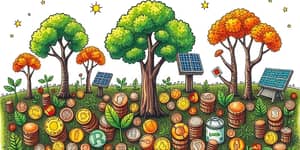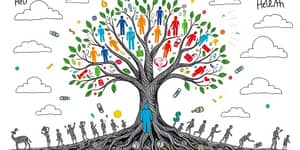
Human capital encompasses the unique qualities that make each individual an asset in any economic context. From formal education to on the job experience and personal health, human capital is the combination of attributes that drive productivity and innovation. At its core, this concept views people as investors in their own future. By intentionally nurturing our talents, knowledge, and well being, we accelerate our capacity to contribute meaningfully and reap the rewards over a lifetime.
While physical assets like machinery and buildings remain visible, human capital is an intangible asset that enhances productivity every day. It is built through years of schooling, hands on practice, and continuous learning. Unlike a tangible purchase, investments in our own abilities compound over time, yielding returns that shape our career, financial health, and broader societal impact.
Understanding Human Capital
Defined by economists such as Becker in the early 1960s, human capital represents the sum total of personal qualities that contribute to economic value creation. These qualities include education, technical know how, health, and accumulated work experience. When viewed through this lens, investing in education or training resembles acquiring new machinery for a factory: both increase productive capacity.
Key components include core competencies like literacy, numeracy, problem solving, and teamwork. Health and well being also play a critical role, as sustained energy levels and mental resilience support consistent performance. Work experience often accounts for nearly half of an individual’s human capital value, underlining the importance of practical exposure and on the job learning.
Why Personal Investment Matters
At the individual level, taking charge of your own human capital yields substantial returns over a lifetime. Studies show that work experience alone can represent up to 46 percent of one’s total wealth in developed economies. Meanwhile, early investments in education and skill development often have the highest payoffs, particularly during childhood and young adulthood.
By investing in your knowledge and skills you not only increase your earning potential but also enhance your adaptability in a rapidly changing job market. Whether pursuing a formal degree, enrolling in certification programs, or dedicating time to self study, each step serves as a building block for future success. These efforts pay dividends in the form of higher wages, richer career opportunities, and greater personal fulfillment.
- Explains at least one third of earnings variation within countries and half across countries
- High returns on investments made during childhood and young adulthood
- Foundational skills like literacy and numeracy are buildable but resource constrained
- Higher order skills such as problem solving and teamwork drive innovation
Organizational and Economic Perspectives
Organizations recognize human capital as a core driver of productivity and competitive advantage. Human Capital Management solutions support recruitment, training, performance management, and analytics to optimize workforce potential. Companies calculate ROI on training by comparing earnings before and after investments, demonstrating how targeted development increases profitability.
On a national scale, human capital correlates strongly with gross domestic product and economic resilience. Countries with robust education systems, widespread healthcare, and active research and development initiatives often outperform those relying solely on natural resources. A productive workforce fuels innovation, consumer spending, and long term prosperity.
Strategies to Enhance Your Human Capital
Building and maintaining human capital requires intention and persistence. The following strategies provide a roadmap for personal investment that pays long term dividends.
- Prioritize continuous learning through courses, workshops, and certifications to stay ahead in your field
- Cultivate foundational skills such as literacy, numeracy, and digital literacy for broader adaptability
- Nurture physical and mental health with regular exercise, balanced nutrition, and stress management
- Seek diverse work experiences and cross functional projects to deepen practical know how
- Develop higher order capabilities like critical thinking and collaboration to drive innovation
- Leverage mentoring and peer networks for guidance, feedback, and accelerated growth
Challenges and Future Outlook
Despite its transformative potential, human capital can depreciate without sustained attention. Technological advances may render skills obsolete, while unemployment or health setbacks can erode capabilities. Recognizing these risks underscores the need for ongoing adaptation and resilience.
Looking ahead, emerging trends such as AI powered learning platforms, predictive analytics for talent management, and digital credentials will reshape how we invest in ourselves. As industries evolve, the ability to upskill rapidly and embrace lifelong learning will define career success. Regions that foster strong education ecosystems and R D hubs will continue to lead the global shift toward a knowledge based economy.
Conclusion
Human capital remains one of the most powerful levers for personal and collective advancement. By treating your skills, education, and well being as assets to be nurtured, you create a foundation for enduring success. Now more than ever, continuous upskilling and education yields compounding returns that drive both financial prosperity and a fulfilling life journey.
References
- https://en.wikipedia.org/wiki/Human_capital
- https://www.researchandmarkets.com/reports/4904936/human-capital-management-market-global
- https://www.weforum.org/stories/2019/06/what-is-human-capital-know/
- https://www.aon.com/en/insights/articles/2026-human-capital-outlook-5-forces-to-act-on
- https://www.mckinsey.com/capabilities/people-and-organizational-performance/our-insights/human-capital-at-work-the-value-of-experience
- https://www.fortunebusinessinsights.com/industry-reports/human-capital-management-hcm-market-100240
- https://smowl.net/en/blog/human-capital/
- https://www.deloitte.com/us/en/insights/topics/talent/human-capital-trends.html
- https://pubs.aeaweb.org/doi/10.1257/jep.36.3.75
- https://www.conference-board.org/expertBriefing/hc-trends-2026
- https://corporatefinanceinstitute.com/resources/economics/human-capital/
- https://documents.worldbank.org/en/publication/documents-reports/documentdetail/099811402092628470
- https://dash.harvard.edu/bitstreams/e6d64d0f-9d3f-4878-8529-cf8df0cb0a99/download
- https://www.fergusonpartners.com/2026-human-capital-trends-in-the-real-assets-industry/
- https://www.rasmussen.edu/degrees/business/blog/what-is-human-capital/