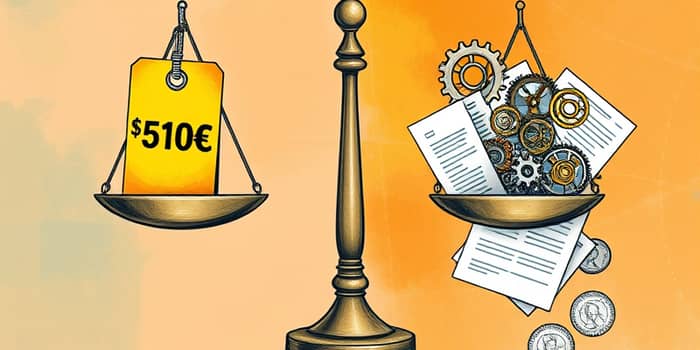
In an era of fast decisions and upfront bargains, it is easy to focus solely on the sticker you pay at checkout. However, this initial payment often conceals a network of subsequent expenses that accumulate over time. By diving deeper into the metrics, we reveal the full picture, ensuring that investments deliver real value.
Understanding Total Cost of Ownership
Total Cost of Ownership (TCO) is more than just a buzzword—it is a financial estimate that quantifies all direct and indirect costs associated with any product or service over its entire lifespan. Instead of stopping at the purchase price, TCO extends its scope to encompass every intermediary expense, from implementation to disposal.
Conceptually, TCO empowers decision makers to compare options on a truly level playing field. It factors in:
- Acquisition phase: purchase price, licensing fees, and taxes
- Operation phase: energy consumption, labor, and subscriptions
- Maintenance phase: repairs, preventive maintenance, and upgrades
- End-of-life phase: disposal, decommissioning, and migration
Calculating TCO: A Step-by-Step Approach
Although TCO may appear complex, a structured method simplifies the process. By following the five-step calculation method, any organization can achieve clarity.
- Identify the upfront purchase cost and financing expenses
- Define the expected ownership duration based on asset lifespan
- Assign values to indirect expenses such as training and installation
- Estimate recurring costs and ad hoc expenses like disaster recovery
- Incorporate qualitative factors such as reliability and user friendliness
Throughout these steps, it is vital to include indirect or hidden costs that can erode value. Every paused workflow during downtime or unplanned repair contributes to the final tally.
Industry-Specific Applications of TCO
While TCO principles remain consistent, each sector tailors the model to its unique requirements. In Information Technology, for example, TCO captures hardware acquisition, software licensing, support communications, and productivity losses due to downtime.
In Human Resources, tools and platforms demand investments in integration, maintenance, and workforce training. Here, ongoing support and documentation expenses often tip the scale.
Construction firms evaluate material costs alongside design, facility management, and disposal fees. A project’s longevity and compliance demands significantly influence its long-term cost.
Procurement and supply chain experts consider factors like inflation, delivery times, spot purchasing, and regulatory compliance when computing TCO, recognizing that supply delays and overruns carry steep penalties.
Vehicle and asset management goes even further, encompassing fuel, insurance, registration, depreciation, interest charges, and potential resale values to provide a holistic view.
Real-World Examples: Bringing Theory to Practice
A school district’s acquisition of laptops for students is a textbook TCO scenario. Beyond bulk-device pricing, they accounted for deployment, security, teacher training, software licensing, and ongoing technical support over five years. The final TCO surpassed the original budget by nearly 40%, yet it validated the need for a managed services agreement to curb unforeseen costs.
A marketing firm considering an in-house print shop discovered that the sum of equipment maintenance, operator training, power consumption, and periodic repairs outweighed outsourcing expenses. By quantifying these elements, the company chose a hybrid outsourcing strategy that delivered optimal cost efficiency and quality.
A restaurant exploring delivery expansion modeled vehicle acquisition expenses, insurance, driver wages, fuel, and depreciation. The analysis revealed that modest delivery fees covered both variable and fixed costs, enabling profitable growth without undermining dine-in margins.
Key Benefits and Strategic Insights
Adopting a TCO mindset transforms decision making. It:
• Ensures informed purchasing decisions by illuminating long-term commitments.
• Facilitates fair comparisons between multiple vendors or solutions.
• Aids in forecasting asset replacement and budget planning.
• Aligns procurement strategies with organizational performance goals.
Factors Influencing Total Cost of Ownership
Several determinants can sway the final TCO. Leaders should examine:
- Labor rates and staffing efficiencies
- Financing methods and interest expenses
- Asset lifespan and technological obsolescence
- Reliability, support quality, and performance metrics
- Energy consumption and environmental compliance
By tweaking each factor—such as negotiating extended warranties or adopting energy-efficient equipment—organizations can maximize return on their investments.
Key Takeaways
TCO analysis reveals that the price tag you see is just the beginning. Hidden charges, labor costs, maintenance, and eventual disposal often exceed the initial outlay.
When TCO is integrated into financial planning, stakeholders make stronger bids, compare alternatives wisely, and avoid budgetary surprises. Ultimately, this fosters a culture of transparency and strategic foresight.
Conclusion
Moving beyond the purchase price transforms how businesses view and manage assets. Total Cost of Ownership equips leaders with a robust framework to anticipate expenses, optimize investments, and sustain value over time. By embracing TCO, you build not just a budget, but a roadmap for enduring success.
References
- https://www.indeed.com/career-advice/career-development/total-ownership-cost
- https://www.pipefy.com/blog/total-cost-of-ownership-tco/
- https://rebim.io/understanding-true-cost-of-ownership/
- https://en.wikipedia.org/wiki/Total_cost_of_ownership
- https://www.ibm.com/think/topics/total-cost-of-ownership
- https://www.geotab.com/blog/total-cost-of-ownership/
- https://www.edmunds.com/tco.html
- https://www.connexusfm.com/post/the-true-cost-of-ownership