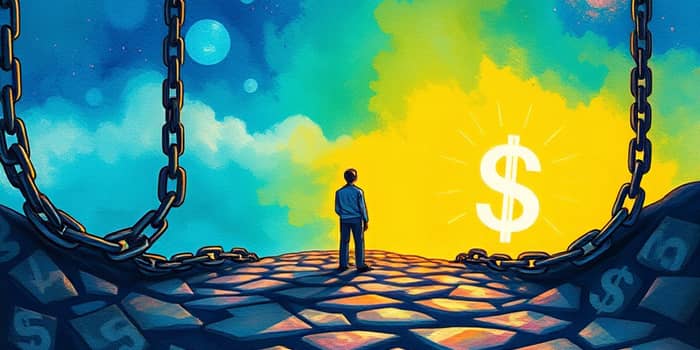
Debt is more than a financial obligation; it affects the mind, the heart, and the very fabric of our lives. Understanding how debt shapes our emotions and behaviors is the first step toward recovery and lasting freedom.
In this article, we explore evidence-based insights, statistics, and strategies to help you break the cycle of indebtedness and cultivate resilience.
Psychological Impact of Debt on Mental Health
Debt exerts a profound toll on mental health, correlating strongly with depression, anxiety, and pervasive stress. Research shows that individuals with short-term debts—such as credit cards or overdue bills—experience higher levels of depression and report poorer family relationships. In fact, problem debt triples the risk of suicidal ideation, with over 100,000 people in England attempting suicide each year while in debt.
Financial worries trigger persistent psychological distress that undermines daily functioning. For example, 64% of psychology graduate students report debt interfering with their academic and personal lives, often accompanied by intense shame and guilt.
Debt Type Differences in Emotional Burden
Not all debt is perceived equally. Student loans rank highest in emotional burden because of their status as “pure debt” after graduation. Unlike mortgages—tied to an ongoing asset—or credit cards, which can be viewed as part of a transactional lifestyle, student loans linger as a constant reminder of past choices.
In the United States, household debt reached $13.86 trillion in Q2 2019. The average American carries $105,000 across various obligations, including cards, auto loans, student debt, and mortgages.
- Student loans: 37.6% of respondents hold them, with 74.1% having attended college.
- Mortgage debt: 36.2% of respondents hold mortgages, and 48.2% own homes.
- Credit cards and auto loans complete the typical debt portfolio.
Behavioral Biases and Repayment Patterns
Our minds employ shortcuts—heuristics—that can worsen debt. “Debt account aversion” leads individuals to pay off smaller balances first for a sense of progress, even when larger, high-interest balances cost more over time. Experiments confirm this penny-wise, pound-foolish approach in multiple settings.
The scarcity mindset, common among those experiencing poverty, focuses attention on immediate essentials like groceries, often at the expense of future obligations such as rent. This tunnel vision perpetuates borrowing and deepens financial strain.
- Debt account aversion: prioritizing small balances first.
- Scarcity bias: concentration on urgent needs over future costs.
- Impulsivity: the strongest personality predictor of missed payments.
Cognitive Biases Fueling Debt Accumulation
Present bias tempts us with immediate gratification while underestimating future consequences. Meanwhile, willful ignorance—avoiding checking balances or credit reports—amplifies stress and uncertainty.
Lifestyle inflation normalizes higher spending as income rises, trapping high earners in cycles of consumption. Emotional triggers like stress or loneliness can spark comfort spending. A 2024 study links these impulses to childhood trauma and low self-regulation.
The Vicious Cycle: Debt and Mental Health
Debt does more than cause worry; it intensifies scarcity and isolation. Aggressive collection practices—five or more calls per month—inflict negative mental effects on 91% of people, compared to 57% who receive fewer calls. Council tax arrears lead 24% to experience difficulties thinking clearly.
Gender and identity also shape experiences: women with mental health issues feel more burdened by bills than men (59% vs. 52%), while men often avoid seeking help due to stigma. Trans and non-binary individuals face additional discrimination, exacerbating stress.
Overall, 18% of those with mental health problems fall into problem debt, and debt reduces depression recovery rates by 4.2 times within 18 months.
Key Statistics at a Glance
Strategies for Healing and Financial Freedom
Breaking free from debt demands both emotional resilience and practical tactics. By recognizing mental triggers and rewiring habits, you can shift from reactive stress to proactive planning.
- Reframe debt as manageable progress: tackle large balances methodically, not just the smallest ones.
- Build a realistic budget: include savings for unexpected expenses to avoid future borrowing.
- Seek supportive communities: reduce isolation by joining peer groups or counseling.
- Address impulsivity directly: use delay tactics or earmark windfalls for debt repayment.
- Advocate for kinder collection practices: know your rights and request reasonable terms.
On a personal level, cultivate mindfulness to counter present bias. Schedule regular check-ins with your finances, and celebrate milestones—no matter how small—to maintain momentum.
At a societal level, policy interventions should reduce aggressive collections, promote financial education, and normalize bankruptcy as a path to recovery rather than a source of shame.
Hope Beyond the Numbers
Debt can feel like an unbreakable chain, but it is neither a moral failing nor a permanent sentence. With awareness of deep-rooted emotional burden and targeted strategies, you can reclaim control over your finances and your well-being.
Remember, recovery is a journey of small wins accumulating into profound change. Start today by taking one step toward clarity—review a statement, set a simple goal, or reach out for support. Your future self will thank you for every effort you make now.
True financial freedom emerges not only from eliminating debts, but also from fostering resilience, building supportive communities, and rewriting the narrative of what it means to live a fulfilling life free from the weight of financial worry.
References
- https://www.debt.org/blog/researchers-study-debt-psychology/
- https://pmc.ncbi.nlm.nih.gov/articles/PMC8806009/
- https://wealthandfinance.digital/the-psychology-of-debt-rewiring-the-brain-for-financial-success/
- https://www.moneyandmentalhealth.org/money-and-mental-health-facts/
- https://www.apa.org/gradpsych/2013/01/debt
- https://thedecisionlab.com/insights/consumer-insights/behavioral-science-of-paying-debts
- https://spssi.onlinelibrary.wiley.com/doi/10.1111/sipr.12074