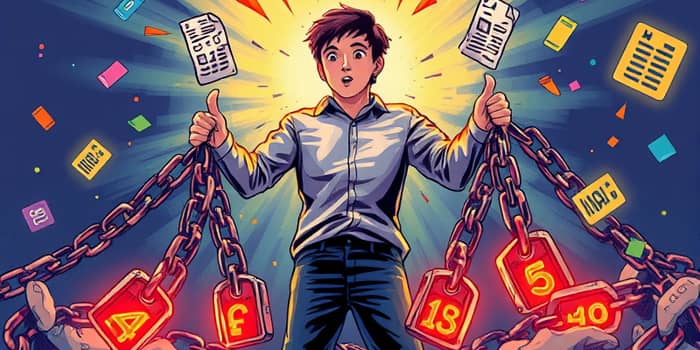
Debt is more than a ledger entry or a monthly payment—it carries invisible costs beyond interest payments that ripple through mental health, life opportunities, and even national stability. From sleepless nights to delayed retirements and hidden sovereign borrowings, the true toll of debt demands scrutiny and action.
The Hidden Toll on Mental Health
Across Canada, debt has become an epidemic of the mind. Recent surveys reveal that 90% of Canadians with personal debt experience moderate to extreme stress, and 67% report stress at the highest levels. Half struggle with sleep disruption while 44% alter their eating habits, and nearly a third face social isolation.
- Persistent anxiety from bills and creditors disrupts daily routines.
- Depression symptoms escalate when obligations outpace income.
- Sleep quality plummets as worry becomes constant.
- Social withdrawal intensifies under financial strain.
Research based on the Stress Process Model shows debt functions as a distinctive daily stressor. It directly raises depression, anxiety, and anger, even after accounting for socioeconomic status and prior health. Comparisons to economic hardship reveal debt’s effects are less mediated by mastery or social support, cementing its role as a critical, independent risk factor in mental health.
Opportunity Losses Across Life Stages
Beyond emotional strain, debt steals chances to build wealth and seize life’s milestones. In the United States, over 45 million borrowers carry more than $1.6 trillion in student loans. This burden directly delays homeownership, retirement savings, family formation, and business startups.
- First-time home buyers postpone mortgages for years.
- Retirement contributions dwindle under loan repayments.
- Entrepreneurial ventures remain dreams, not realities.
- Credit costs rise, particularly affecting women and minorities.
For many, these opportunity losses like delayed homeownership compound over decades. Damaged credit profiles lead to higher borrowing costs for borrowers of color and lower-income families. The result is a widening wealth gap that undermines economic mobility and long-term wellbeing.
When Debt Goes Unseen: Sovereign and Hidden Borrowing
Debt’s hidden face extends to national finances, where unreported obligations amplify uncertainty and risk. Recent data revisions uncovered over $1 trillion in hidden sovereign borrowing—more than 12% of total debt in many countries.
Hidden debt tends to be procyclical—amassing during booms and revealing itself in downturns, as seen during the COVID-19 shock. Countries facing undisclosed obligations endure deeper recessions, higher borrowing spreads, and permanent welfare costs of up to 5.5% of income.
Lessons from Real-World Cases
The fallout of concealed borrowing and personal overextension is illustrated by case studies across the globe. In Mozambique and Zambia, illegal and hidden debts delayed restructurings, amplified coordination failures, and saddled citizens with heavier economic burdens.
Closer to home, a survey of 643 Canadian insolvency clients found 63% reported dramatically lower stress after professional interventions. In the United States, student borrowers face compounding credit penalties that echo through home loans and auto financing, deepening anxiety and financial fragility.
Charting a Path Forward: Solutions and Hope
Addressing debt’s hidden costs requires a dual focus on emotional resilience and financial reform. Individuals need accessible mental health resources and practical financial planning, while policymakers and institutions must prioritize transparency and support.
- Expand debt counseling services integrated with mental health care.
- Mandate timely reporting of government and corporate borrowings.
- Promote insolvency frameworks that restore credit and wellbeing.
- Incentivize savings and emergency funds to buffer future shocks.
By offering holistic support including counseling and guidance and enforcing rigorous oversight, societies can reduce stress and unlock lost opportunities. The relief from insolvency shows that when debt burdens lift, people regain agency, productivity, and hope.
Ultimately, recognizing these long-term economic harm and uncertainty—and countering them with compassion and policy—can transform debt from a chronic stressor into a managed tool for growth. Through collective action and personal resilience, we can foster newfound financial freedom and peace for millions across households and nations.
References
- https://www.wealthprofessional.ca/news/industry-news/canada-is-facing-a-hidden-debt-fueled-mental-health-crisis-report-reveals/387384
- https://protectborrowers.org/new-research-shows-student-debts-secret-price-tag/
- https://pmc.ncbi.nlm.nih.gov/articles/PMC6521877/
- https://uxinsight.org/research-debt-the-hidden-costs-of-unvalidated-assumptions/
- https://www.ipsos.com/en-ca/personal-finance-affecting-canadians-mental-health
- https://debtsolutions.bdo.ca/signs-debt-is-affecting-your-mental-health/
- https://www.ellucian.com/blog/hidden-cost-technical-debt-institutional-research
- https://mnpdebt.ca/en/resources/mnp-debt-blog/the-link-between-mental-and-financial-health-mnp-3-minute-debt-break
- https://www.thirdwunder.com/blog/why-process-debt-is-the-invisible-tax-on-your-growth/
- https://fpcanada.ca/account/dashboard/fp-canada--2024-financial-stress-index-finds-91-per-cent-of-canadians-are-taking-steps-to-improve-financial-wellness-amidst-stress-increase
- https://pmc.ncbi.nlm.nih.gov/articles/PMC4707673/
- https://www.canada.ca/en/financial-consumer-agency/services/financial-wellness-work/stress-impacts.html
- https://www.aspeninstitute.org/blog-posts/hidden-costs-of-consumer-debt/