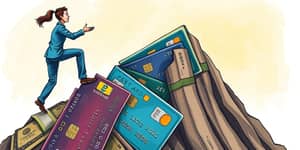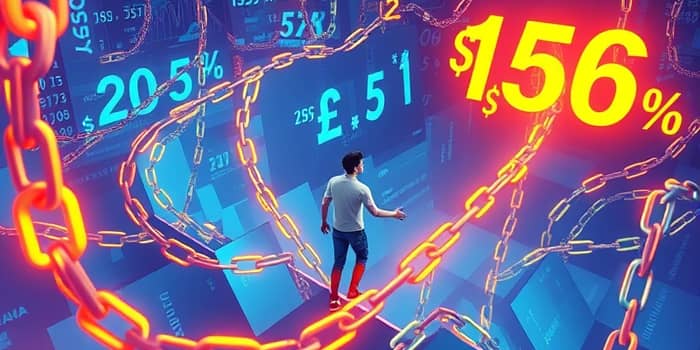
Carrying a credit card balance can feel convenient in the moment, but over time it exacts a heavy toll on both finances and well-being. As average interest rates approach 22%, millions of cardholders face mounting debts they never fully see coming. This article uncovers the true cost of revolving credit and equips you with strategies to regain control.
The Interest Rate Crisis
Since 2020, average credit card rates have soared from 16.28% to nearly 22%. With inflationary pressures and successive Federal Reserve hikes, skyrocketing credit card interest rates now hover around historic highs last seen in 2012. Even consumers with strong credit scores still pay rates exceeding 20% APR, while those with lower scores contend with nearly 28%.
- Average APR for all accounts: 21.39% (Q3 2025)
- APR for balances assessed interest: 22.83%
- Range by card type: 14.34%–24.69%
- General purpose cards average 24.62% APR
Every dollar you carry forward compounds at these rates, turning small purchases into long-term obligations.
The Compounding Effect of High APR
Interest does more than add a constant fee; it multiplies your debt over time. On a $5,000 balance at 22% APR, you could pay over $1,900 in interest in just one year if you only make minimum payments. This accelerate the growth of debt phenomenon traps many borrowers in a cycle of paying interest on interest.
Imagine two friends, each charging $1,000. One friend pays the full balance monthly and thus avoids interest. The other makes only minimum payments. Within 18 months, the second friend owes nearly $1,250 due to accumulating interest. This stark difference underscores why carrying any balance can be so expensive.
Interest Rate Variations by Issuer
Hidden Fees and Forgotten Subscriptions
Beyond interest, consumers often overlook small recurring charges that quietly inflate their statements. Studies show nearly half of credit card users discover forgotten subscription fees each month. This overlooked subscription charges silently drain disposable income, leading to unexpected “bill shock.”
- 50% check statements monthly for accuracy
- 48% occasionally find forgotten memberships
- 24% discover these charges every month or more
- 38% experience statements higher than expected
Buy-Now-Pay-Later schemes can worsen the issue: 41% of Americans use credit cards to settle BNPL payments, compounding debt risk and obscuring true costs.
Behavioral Economics: Impulse and Regret
Emotional spending patterns play a critical role in debt accumulation. Roughly one in five debtors admit to hiding purchases from loved ones, indicating awareness that they’re exceeding budgets. Impulse buys—from dining out to online splurges—often carry regret.
Key regrets among credit card users include:
• Paying too much interest (34% of debtors)
• Carrying a balance instead of paying in full (32%)
• Making impulse purchases (30%)
• Overspending on nonessentials (27%)
These behaviors illustrate how small lapses in self-control, fueled by easy credit, can snowball into substantial debt.
Emergency Debt Spiral
Unexpected expenses—car breakdowns, medical bills, job loss—are cited by 45% of cardholders as triggers that push them toward revolving debt. In the absence of an emergency fund, consumers often rely on credit to bridge gaps, only to find themselves unable to pay off the balances later.
- Medical emergencies: 44%
- Job loss: 33%
- Child-related expenses: 26%
- Car repairs: 11%
This unexpected emergencies can derail finances by forcing minimum payments and accruing interest, perpetuating a dangerous cycle.
Prevention and Recovery Strategies
Breaking free from credit card debt requires a multi-pronged approach. First, adopt the principle of paying full balance monthly whenever possible. This simple habit eliminates interest charges entirely.
Next, set up automatic payments ensure timely bill settlements to avoid late fees and additional penalties. Even if you can’t pay in full, automating minimum payments reduces the risk of missed due dates and rising rates.
Maintain a vigilant review process. By regularly reviewing billing statements, you catch hidden fees and forgotten subscriptions before they accumulate. Cancel nonessential memberships and negotiate lower APRs by calling your issuer if you have a solid payment history.
Building an emergency fund is equally important. Aim for three to six months’ worth of living expenses in a dedicated savings account. This financial buffer prevents you from relying on high-interest credit during crises.
Finally, monitor your credit score. A FICO score of 690 or above can unlock lower APR offers, saving hundreds—if not thousands—of dollars annually. Many free tools and apps will alert you to score changes and personalized rate offers.
In combination, these tactics provide a roadmap out of the revolving debt trap and toward lasting financial health.
References
- https://listwithclever.com/research/average-american-credit-card-debt-2025/
- https://www.experian.com/blogs/ask-experian/research/current-credit-card-interest-rate/
- https://wolfstreet.com/2025/05/20/credit-card-delinquencies-balances-debt-to-income-ratio-and-credit-limits-in-q1-2025-our-drunken-sailors-and-their-credit-cards/
- https://www.lendingtree.com/credit-cards/study/average-credit-card-interest-rate-in-america/
- https://www.lendingtree.com/credit-cards/study/credit-card-debt-statistics/
- https://www.nerdwallet.com/credit-cards/learn/what-is-the-average-credit-card-interest-rate
- https://www.experian.com/blogs/insights/2025-state-of-credit-card-report/
- https://www.philadelphiafed.org/surveys-and-data/2025-q1-large-bank
- https://www.bankrate.com/credit-cards/news/credit-card-debt-report/
- https://fred.stlouisfed.org/series/TERMCBCCALLNS
- https://www.bankrate.com/credit-cards/advice/current-interest-rates/
- https://libertystreeteconomics.newyorkfed.org/2025/03/why-are-credit-card-rates-so-high/
- https://www.federalreserve.gov/releases/g19/current/