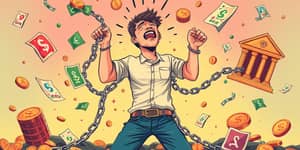
Most borrowers focus on the principal and the stated interest rate when they take on a loan. Yet, beneath the surface lies a web of indirect, often overlooked financial burdens that silently drain wealth and erode opportunities.
From the penalties that student debt inflicts on mortgage rates to the junk fees that cash-poor families pay, these hidden charges compound over time. Recognizing and confronting them can transform your financial destiny.
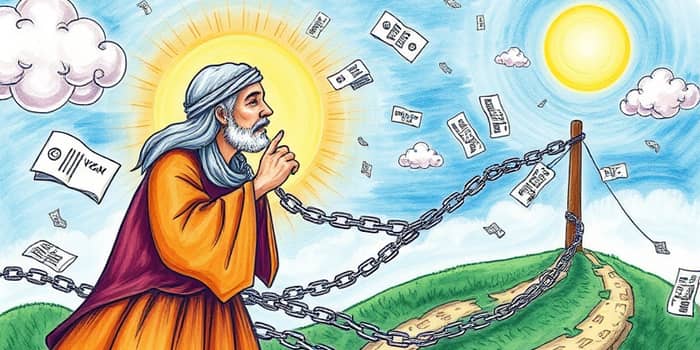
To truly master your borrowing journey, you must become the Debt Whisperer—uncovering unseen costs and reclaiming control.
The Ripple Effects of Student Debt Burdens
Student loans are more than an academic investment; they are a lifelong financial companion. Analysis of millions of Experian credit records analyzed reveals that a high student debt load can tack on an extra $29,000 in costs across auto loans, mortgages, and credit cards. Even borrowers who keep current on payments face an average of $11,000 in additional charges, while those under strain may incur tens of thousands more.
These ripple effects hit low-income, women, and borrowers of color hardest, blocking homeownership, retirement savings, and entrepreneurial aspirations.
Behavioral Biases in Borrowing Choices
Human psychology often magnifies hidden costs. In Swedish housing co-ops, buyers choose bundled loans that seem hassle-free but carry higher net interest than personal loans. Regression studies show a co-op loan coefficient of −0.316, indicating that buyers undervalue long-term costs when fees lack transparency.
This inattention to salience and visibility drives costly decisions from payday loans to mortgage yield spreads, perpetuating financial strain.
Household and Junk Fees: The Silent Drains
Homebuyers in credit-insecure areas pay disproportionately high closing costs, averaging $5,119 on bank-originated loans. These fees can deplete emergency savings, fueling cycles of delinquency and distress.
Meanwhile, cash-poor Americans pay $25 billion annually in hidden junk fees—everything from ATM surcharges to expedited processing charges. Small-dollar products marketed as fee-free may impose hefty penalties elsewhere, chasing borrowers into overdraft traps.
Cheap Credit Misallocation and Macro Effects
Even at the macro level, unintended economic distortions emerge when interest rates are too low. Cheap credit can prop up unproductive firms—so-called zombie companies—squeezing out healthy competition and stalling growth.
While low rates sound beneficial, a “welfare-reversal rate” may exist below which credit harms the economy more than it helps.
Practical Strategies to Uncover and Mitigate Hidden Costs
Becoming financially resilient requires purposeful action. Use these tactics to expose and reduce unseen charges:
- Review loan disclosures line by line; demand full cost itemization beyond interest.
- Shop multiple lenders to compare closing costs, origination fees, and rate locks.
- Set alerts for credit-score changes to catch hidden rate increases early.
- Negotiate junk fees or ask for waivers on services you don’t use.
Regularly audit subscriptions, bank statements, and credit reports. Awareness is your first line of defense.
A Call for Policy and Personal Action
Policy makers can curb hidden costs by mandating clearer disclosures, capping junk fees, and enforcing salience mandates in loan contracts. Transparency initiatives not only protect vulnerable groups but also foster healthier credit markets.
On a personal level, cultivate the habits of the Debt Whisperer: question every fee, challenge every assumption, and empower yourself with knowledge. By shining light on hidden costs, you reclaim your financial future and help shape a more equitable system for all.
Your journey begins when you listen to the whispers of unseen charges—and respond with purpose.
References
- https://protectborrowers.org/new-research-shows-student-debts-secret-price-tag/
- https://academic.oup.com/rof/article-abstract/18/6/2247/1663660
- https://www.jpmorganchase.com/institute/all-topics/community-development/hidden-costs-of-homeownership-race-income-and-lender-differences-in-loan-closing-costs
- https://knowledge.essec.edu/en/economy-finance/the-hidden-cost-of-cheap-credit.html
- https://www.buffalo.edu/ubnow/stories/2025/05/lin-ipo-loan-hidden-costs.html
- https://fortune.com/2023/08/09/cash-poor-americans-paying-25-billion-hidden-junk-fees-each-year-simple-solution-protect-consumers-banks-rodney-williams/
- https://bryanbusinessreport.uncg.edu/bryan-business-report-fall-2024/the-hidden-cost-of-student-loans/
- https://pmc.ncbi.nlm.nih.gov/articles/PMC4707673/