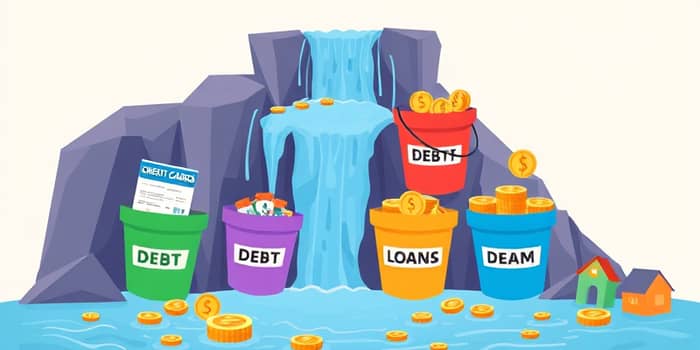
In the quest for financial stability, debt can often feel like an insurmountable mountain. However, imagine a strategy that channels your efforts like water flowing systematically down a cascade, ensuring every drop of your money works efficiently to clear your obligations. This is the essence of the debt reduction waterfall, a powerful personal finance prioritization method adapted from corporate finance models to help you regain control.
By structuring payments in a hierarchical sequence, you tackle the most costly debts first, freeing up resources for other goals. This approach not only saves money on interest but also builds momentum, making debt freedom an achievable reality rather than a distant dream.
Embrace this method to turn financial stress into a strategic plan, where each payment is a deliberate step towards a brighter, debt-free future. Let's dive into how this works and why it can be your key to financial liberation.
Understanding the Core Concept
The debt reduction waterfall draws inspiration from structured finance models used in corporations and real estate. It involves treating your debts like buckets that need to be filled in a specific order. Money flows like water into these buckets, with higher-priority ones receiving payments first before any overflow reaches lower ones.
This analogy ensures that you focus on eliminating the most expensive or risky debts initially. For instance, credit cards with high interest rates are tackled before student loans or mortgages. This prioritization minimizes total interest costs and reduces financial risk, mirroring how senior lenders are protected in business deals.
By adopting this mindset, you shift from haphazard payments to a disciplined strategy. It's about making every dollar count, ensuring that your hard-earned money isn't wasted on accruing interest but instead accelerates your journey to financial freedom.
Steps in the Personal Debt Reduction Waterfall
Follow this prioritized sequence with all available cash beyond minimum payments. It's designed to maximize savings and build financial resilience step by step.
- Pay off high-interest debt first, such as credit cards with APRs of 15-25%. This stops the interest bleed and frees up cash flow quickly.
- Build an emergency fund covering 3-6 months of expenses. This protects against new debt from unexpected events, ensuring your progress isn't derailed.
- Maximize employer 401(k) match contributions. This is essentially free money with guaranteed returns, often equivalent to a 100% ROI on the matched amount.
- Contribute to tax-advantaged accounts like IRAs or 401(k)s to leverage government incentives, such as tax refunds, which can be used to accelerate debt paydown.
- Pay off low-interest debt, including student loans at 4-6% or mortgages, to reduce long-term erosion on your savings potential.
- Invest surplus funds toward financial goals like retirement or home purchases, once all debts are cleared.
This order ensures that expensive debts are addressed ahead of other obligations, providing a clear roadmap for your finances.
Benefits of the Waterfall Approach
Adopting this method offers numerous advantages that go beyond just saving money. It brings structure and efficiency to your financial life.
- Significant interest savings by targeting high-cost debts first. For example, paying off a credit card with 18% APR before a student loan at 5% can save hundreds of dollars annually.
- Risk mitigation by protecting against defaults on critical debts, similar to how senior lenders are prioritized in corporate finance.
- Automated prioritization through budgeting apps, making it easier to stick to the plan without constant manual adjustments.
- Improved cash flow management, as freed-up money from paid-off debts can be redirected to other priorities.
- Psychological benefits, including reduced stress and a sense of accomplishment as you see debts disappear in order.
This method empowers you to take charge, transforming debt from a burden into a manageable process.
Practical Examples and Scenarios
To illustrate the waterfall method in action, consider real-world scenarios. These examples show how prioritization can lead to better outcomes.
These examples highlight how the waterfall method adapts to different financial situations, ensuring optimal resource allocation.
Corporate and Real Estate Parallels
The debt reduction waterfall has roots in broader financial contexts, which can provide valuable insights for personal application. In corporate finance, debts are often structured into tranches with varying priorities.
- Senior debt is paid first, typically with lower interest rates, similar to tackling high-interest personal debts upfront.
- Mezzanine and junior debts follow, mirroring how lower-priority personal obligations are addressed later.
- Equity waterfalls in real estate funds distribute profits after debts are cleared, akin to investing surplus funds post-debt repayment.
Understanding these parallels can help you appreciate the robustness of this method. It's a proven strategy that has been scaled down for individual use, offering a reliable framework for debt management.
Potential Pitfalls and How to Avoid Them
While the waterfall method is effective, it's not without risks. Being aware of these can help you navigate challenges smoothly.
- Junior debts may go unpaid if cash flow is insufficient, so always prioritize building an emergency fund to buffer against shortages.
- Over-prioritizing employer matches might delay essential debt payments; balance this by adjusting the sequence based on your risk tolerance.
- Confusion with unrelated terms like waterfall lending or project management; focus on the debt prioritization aspect to stay on track.
By anticipating these issues, you can tailor the method to your unique circumstances, ensuring it remains a helpful tool rather than a source of frustration.
Alternatives and Complementary Strategies
It's useful to compare the waterfall with other debt reduction methods to find the best fit for your needs.
- Debt snowball method: Pay off smallest debts first for quick wins, but may cost more in interest.
- Debt avalanche method: Similar to waterfall, focusing on highest interest rates, but without the structured prioritization of other financial goals.
- Cash sweep strategies: Use excess cash to prepay debts without fees, accelerating payoff but requiring disciplined savings.
Integrating elements from these strategies can enhance your plan. For instance, combine the waterfall with budgeting for good finances to create a holistic approach to debt relief.
Taking Action and Moving Forward
Implementing the debt reduction waterfall starts with a clear assessment of your debts and financial goals. List all your obligations, including interest rates and minimum payments. Then, allocate extra funds according to the prioritized sequence outlined earlier.
Use tools like budgeting apps to automate payments and track progress. Regularly review your plan to adjust for changes in income or expenses. Remember, this method is about consistency and patience; small, steady steps lead to significant long-term results.
Embrace the journey with optimism. Each payment brings you closer to financial freedom, reducing stress and opening doors to new opportunities. The waterfall method isn't just about paying off debt; it's about building a foundation for a secure and prosperous future.
By prioritizing wisely, you can transform your financial landscape, turning debt from a chain into a ladder towards your dreams. Start today, and let the flow of your efforts carry you to a debt-free life.
References
- https://fintelligents.com/waterfall-payments/
- https://www.backofficepro.com/kpo/article-cash-waterfall.php
- https://versa.com.my/the-waterfall-method-how-you-can-flow-your-cash-better/
- https://breakingintowallstreet.com/kb/real-estate-modeling/real-estate-waterfall-model/
- https://www.covercy.com/debt-waterfall/
- https://www.youtube.com/watch?v=_fsJBZpTPQY
- https://www.finmkt.io/blog-posts/waterfall-lending
- https://dev.to/hexadecimalsoftware/case-studies-in-project-management-agile-vs-waterfall-success-stories-1cc4
- https://www.ovlg.com/waterfall-approach-debt-free.html
- https://agorareal.com/blog/real-estate-distribution-waterfall/
- https://www.financialmodellinghandbook.org/what-is-a-cash-flow-waterfall-in-project-finance/
- https://www.jpmorgan.com/insights/real-estate/investing/equity-waterfall-in-commercial-real-estate-explained
- https://www.allvuesystems.com/resources/american-vs-european-waterfall/
- https://www.wallstreetprep.com/knowledge/real-estate-waterfall/