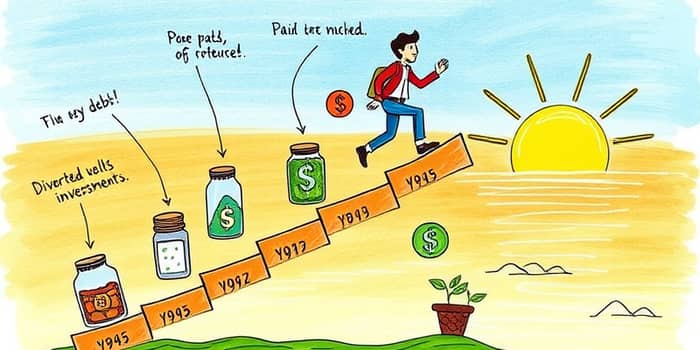
Embarking on a ten-year journey to eliminate debt and cultivate wealth is a bold commitment that reshapes your future. By following a structured plan, you can transform financial stress into unwavering confidence and clarity and set yourself on a path toward lasting prosperity.
Assessing Your Debt Landscape
Your first step is to understand the full scope of what you owe. List every outstanding balance, interest rate, and minimum payment. This holistic view empowers you to make informed choices and prioritize effectively.
Two popular repayment methods can guide your path:
- Pay smallest debts first for quick motivational wins and momentum.
- Target highest-interest debts first to minimize the long-term cost.
Negotiating with lenders can also unlock savings. One couple paid off $124,094 in under two years by securing rate reductions that saved them $4,800 per year. If you consolidate debts, you may be debt-free in 24 to 48 months, simplifying payments and reducing stress.
Budgeting and Spending Habits
Building financial discipline starts with a realistic budget. Track every dollar flowing in and out of your accounts, categorizing essentials like housing and groceries separately from discretionary spending such as streaming services and dining out.
- Automate excess income transfers to accelerate debt repayments without thinking about it.
- Adopt a cash-based system or sinking funds to stay vigilant about spending.
- Reevaluate your housing choices—renting versus buying—to optimize monthly cash flow.
When expenses feel overwhelming, remind yourself that each dollar saved accelerates your move to a state of genuine financial freedom.
Building Emergency Funds and Safety Nets
An emergency fund is your financial shock absorber. Begin with a starter buffer of $500 to $1,000, then work toward three to six months’ worth of living expenses. This fund guards against unexpected medical bills, car repairs, or job interruptions, preventing you from relying on high-interest credit cards.
Keep these reserves in a separate account, so they remain untouched for true emergencies. As your debt diminishes, you can shift your focus toward long-term savings and investment goals with confidence that surprises won’t derail your progress.
Investing and Retirement Planning
Once high-interest debts are conquered and your emergency fund is solid, turn your attention to growing your wealth. The power of compounding means the earlier you start, the greater your potential gains. Make regular contributions to tax-advantaged accounts such as 401(k)s and IRAs, especially if your employer offers a matching contribution.
Craft a diversified portfolio for balanced growth by allocating assets across stocks, bonds, and real estate. Consider dollar-cost averaging — investing a fixed amount consistently — to smooth out market volatility and build discipline.
Advanced strategies, like Roth IRA conversions or optimizing required minimum distributions (RMDs), can save you thousands in taxes over a lifetime. Automate deposits and reinvest dividends to maintain momentum effortlessly.
Insurance and Protection
Protecting your hard-earned assets is just as important as growing them. Regularly review and update your health, life, and property insurance policies to reflect life changes such as marriage, parenthood, or a new home.
Having the right coverage ensures that unexpected events—medical emergencies or natural disasters—do not wipe out your savings or derail your retirement plans. Strong protection lays the groundwork for lasting peace of mind.
Cultivating a Long-Term Mindset
Financial security is a lifelong commitment. Set clear goals for each decade of your life: in your 20s, focus on fundamentals like budgeting and eliminating small debts; in your 30s and 40s, accelerate retirement contributions and secure insurance; in your 50s and beyond, optimize taxes and plan for legacy wealth transfer.
Stay informed on changing tax laws and market trends. Celebrate every milestone—no matter how small—to sustain motivation. Remember, automate savings and investments monthly to remove the temptation of spending and build an unbreakable habit.
Decade-Structured Roadmap
Breaking your ten-year plan into manageable phases turns a daunting goal into an achievable mission:
By the end of the decade, your financial landscape will be transformed. You’ll stand on the solid ground of freedom and security, with resources to support retirees, new entrepreneurs, or philanthropic causes close to your heart.
Embarking on a debt-free decade is more than a plan—it’s a declaration of self-worth and empowerment. Each strategic step brings you closer to a life where money serves your dreams, not controls your choices. Take the first step today, and let the next ten years be the most liberating of your life.
References
- https://www.nationaldebtrelief.com/blog/debt-guide/debt-relief/breaking-free-from-debt-strategies-for-financial-security/
- https://goldstonefinancialgroup.com/crafting-financial-security-innovative-strategies-for-lifetime-income-planning/
- https://www.bankrate.com/personal-finance/debt/living-debt-free/
- https://bridgestrust.com/9-financial-tips-to-help-you-work-toward-a-more-secure-future/
- https://right-benefits-367286.framer.app/debt-free
- https://www.moneyfit.org/financial-security/
- https://www.accrediteddebtrelief.com/blog/debt-by-the-decade-what-to-focus-on-in-your-20s-30s-40s-and-beyond/
- https://njaes.rutgers.edu/sshw/message/message.php?p=Finance&m=218
- https://www.miamiherald.com/news/business/article314847529.html
- https://smartpurse.me/en/learn/10-ways-build-long-term-financial-security-your-family
- https://www.goodmorningamerica.com/video/68017459
- https://www.summitfcu.org/reaching-my-summit/5-early-habits-for-lifelong-financial-security/
- https://www.fnbo.com/insights/personal-finance/2023/5-tips-financial-security