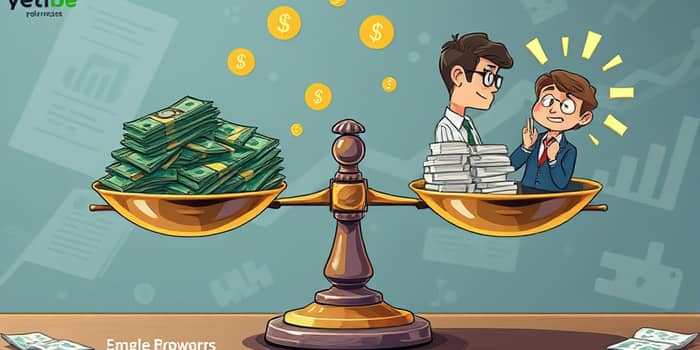
Personal loans are unsecured forms of credit that empower borrowers to consolidate debt, cover unexpected emergencies, or fund home improvements. Borrowers can access amounts ranging from $1,000 to over $100,000 with terms spanning 24 to 120 months. Annual percentage rates (APRs) vary widely, typically from 6% up to 36%, influenced by credit profile, income, and prevailing Federal policy.
Understanding the nuances of personal credit can help you save thousands in interest, avoid costly pitfalls, and choose the right lender. In this guide, we explore unsecured personal loan options under three lenses: the benefits, the drawbacks, and the risks.
The Good
For creditworthy applicants, personal loans offer compelling advantages over alternatives like credit cards or payday advances. Consumers with strong credit can secure single-digit annual percentage rates and tap into funds swiftly, often within days.
- lower interest than credit cards for debt consolidation
- fixed-rate monthly payment plans for predictable budgeting
- No collateral required, enabling non-collateral financing option
- fast funding in one business day at many online lenders
Consider a $11,700 credit-card balance at 23.62% APR versus a 60-month personal loan at 14.48% APR: monthly payments drop from $334 to $275, saving $3,531 over the loan term. Many borrowers unlock similar debt consolidation savings while reducing default risk.
The Bad
Despite the perks, personal loans carry inherent limitations. Because they lack collateral, lenders charge higher rates than on mortgages or auto loans. Origination fees of 1% to 8% are common, and borrowers may pay late fees or prepayment penalties.
- Requires credit scores often above 600 for competitive APRs
- Origination and late fee charges up to 8% of loan amount
- Longer terms increase total interest paid over life of loan
- Qualification hurdles can include income verification and debt-to-income caps
Applicants with fair credit (630–689) face average APRs near 18%, while those below 630 may see rates above 21%, limiting affordability. Unlike secured loans, failure to repay can severely damage credit and incur collection actions without any asset protections.
The Ugly
At the high end, interest rates cap at 36%, trapping vulnerable borrowers in cycles of debt. Subprime personal loans from some online specialists impose rates from 25% to 36%, along with aggressive fee structures.
Delinquency rates for unsecured personal credit hover at 3.9%—reflecting both consumer strain and broader economic pressures. Average loan balances have climbed to $11,773, up 6% year-over-year, contributing to record high total personal debt.
Without strict discipline, borrowers risk overleveraging; missed payments can trigger penalty APRs and mounting fees. High-cost loans may accelerate financial distress rather than alleviate it.
Statistics and Trends
Personal loan usage continues its eleventh consecutive growth quarter, with 23.5 million U.S. consumers holding unsecured loans totaling $245 billion. The average borrower carries $11,773, up 6% from the previous year.
Delinquency (60+ days past due) stood at 3.9% by end-2023. Rate variance is stark: prime borrowers pay around 11.3%, while subprime pay over 25.2%.
Lender Comparisons
APR offerings differ by provider type. Online lenders like LightStream lead with starting rates near 6.49%, while community banks and credit unions average 10.6% to 11.6% but may require branch visits.
Major banks (Wells Fargo, American Express) typically quote 6.99%–19.99%, whereas credit unions such as PenFed and Navy Federal offer 7.89%–18.00%. Online marketplaces (LendingClub, Upstart) extend 6.70%–35.99% to match risk appetites.
Factors Affecting Rates
Your credit score remains the primary determinant of loan pricing. Income level, employment history, and debt-to-income ratio further influence offers. Institutional tendencies matter: online lenders may underwrite more aggressively, while banks adopt conservative credit policies.
Federal monetary policy also shapes APR floors. After the December 10, 2025 quarter-point cut, average personal loan rates dipped slightly but remain elevated compared to pre-Great Recession levels.
Tips for Borrowers
- pre-approval without a hard credit pull lets you compare rates freely
- Shop across online lenders, banks, and credit unions for best deal
- optional co-signer to improve chances for lower APRs
- Borrow only what you can afford to repay comfortably
Pre-qualifying with multiple lenders helps reveal the full spectrum of potential offers without impacting credit scores. For well-qualified borrowers, credit unions often provide the lowest fees, while online lenders excel in speed and convenience.
Before signing, calculate total interest costs over the full term. Factor in origination fees and any prepayment penalties. A shorter term reduces total interest but increases monthly payment obligations.
Personal loans can be a transformative financial tool when used judiciously. By understanding the nuances of pricing, lender behaviors, and risk factors, borrowers can leverage fixed-rate monthly payment plans to achieve goals—whether paying off high-cost debt, managing emergencies, or financing life milestones.
The key lies in informed decision-making: evaluate offers, read disclosures, and choose structures that align with your budget and credit profile. Armed with insight, you can navigate the good, sidestep the bad, and avoid the ugly traps of personal credit.
References
- https://www.nerdwallet.com/personal-loans/learn/average-personal-loan-rates
- https://www.experian.com/loans/personal/
- https://www.bankrate.com/loans/personal-loans/rates/
- https://www.creditkarma.com/personal-loans/shop
- https://fortune.com/article/personal-loan-rates-02-06-2026/
- https://www.credible.com/personal-loan
- https://www.consumeraffairs.com/finance/personal-loan-statistics.html
- https://fortune.com/article/personal-loan-rates-01-26-2026/
- https://www.federalreserve.gov/data/sloos/sloos-202601.htm
- https://fred.stlouisfed.org/series/TERMCBPER24NS
- https://www.experian.com/loans/personal/best-unsecured-loans/