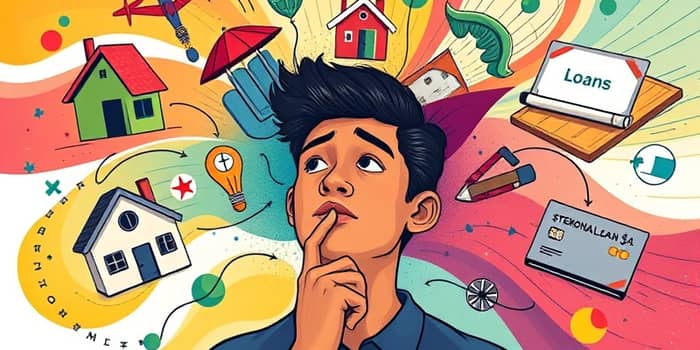
Embarking on a borrowing journey can feel overwhelming. This guide breaks down your options and helps you borrow with confidence.
Understanding Borrowing Basics
Loans come in many shapes, but they all share common elements: interest, repayment term, and risk. Grasping these fundamentals is the first step toward navigate complex lending terms confidently.
Secured vs. Unsecured Loans: Secured loans require collateral—such as a car or home—while unsecured loans rely solely on your creditworthiness. The presence of collateral usually translates into lower interest rates and easier approval.
Fixed vs. Variable Rates: A fixed rate locks in your interest percentage for the loan’s duration, making budgeting predictable. Variable rates fluctuate with market benchmarks, potentially offering savings if rates fall but introducing uncertainty if they rise.
Major Loan Categories Explored
Below is an overview of the most common loan types, complete with key details and typical use cases. Review these options carefully to streamline your debt repayment efforts.
Government-Backed and Special Mortgage Programs
First-time buyers and eligible communities can benefit from tailored programs:
- FHA Loans: Low 3.5% down payment; credit scores as low as 580; mortgage insurance required.
- VA Loans: No down payment or PMI; exclusive to veterans and spouses; competitive rates.
- USDA Loans: Zero-down mortgages for rural, low- and moderate-income borrowers.
- State and local housing agency programs: Assistance for first-time buyers, public employees, and low-income families.
- Special Purpose Credit Programs: Targeted support to underserved communities.
High-Risk Loans to Caution Against
Some quick-cash solutions come at a steep cost. Exercise caution to avoid high-interest debt traps.
- Payday Loans: Small advances due next payday; APRs often exceed 300%.
- Cash Advance Apps: Short-term funds with fees or tipping; repayable within two weeks.
- Pawnshop Loans: Secured by personal items; high rates and forfeiture risk.
2026 Market Trends and Rate Overview
The lending landscape in 2026 features competitive rates and streamlined processes. Top personal loan providers include Discover (debt consolidation), LightStream (home improvement), and SoFi (member perks).
Examples of standout options:
- Happy Money: $5,000–$50,000 for debt consolidation, 2–5 years, simplified service.
- Prosper: $2,000–$50,000, 24–60 months, next-day funding available.
Fixed-rate loans remain the dominant choice for predictability, while variable-rate products are less common and carry payment fluctuation risk.
Eligibility Factors and Key Lending Terms
Approval hinges on several criteria. Always compare annual percentage rates carefully and assess your position.
- Credit Score: Higher scores unlock lower rates and larger loan amounts.
- Income and Stability: Consistent earnings reassure lenders of repayment ability.
- Debt-to-Income (DTI) Ratio: Lower ratios signal manageable obligations.
- Collateral: Required for secured loans; impacts rate and amount.
- Loan-to-Value (LTV): Especially important for mortgages and equity loans.
Understand origination fees, prepayment penalties, deferment, and forbearance options to avoid surprises. Monitoring your credit reports with Experian, TransUnion, and Equifax can bolster your negotiating power.
Building a Smart Borrowing Strategy
By aligning your needs with loan features, you can protect your financial future with knowledge. Start by listing priorities, such as low monthly payments or short-term payoff.
Use rate comparison tools that let you prequalify with soft credit checks. When possible, secure a co-signer to access better terms, but remember they share liability despite lacking fund access.
Ultimately, match loan options to your goals—whether consolidating high-interest debts, financing education, or unlocking home equity. Armed with clear insights, you can secure lower borrowing costs effectively and steer clear of predatory traps.
Empower your decisions, track your progress, and revisit your strategy as market rates and life circumstances evolve. With the right approach, borrowing becomes a tool for growth rather than a burden.
References
- https://www.consumerfinance.gov/owning-a-home/explore/understand-the-different-kinds-of-loans-available/
- https://www.creditkarma.com/personal-loans/shop
- https://www.experian.com/blogs/ask-experian/types-of-loans/
- https://www.nerdwallet.com/personal-loans/learn/personal-loan-types
- https://www.lendingtree.com/personal/different-types-of-personal-loans/
- https://www.experian.com/loans/personal/
- https://www.capitalbank.com/mortgage-loan-types-explained-a-complete-guide-to-finding-the-right-home-financing-option/
- https://www.bestegg.com/blog/types-of-personal-loans-and-how-to-choose-them-wisely/
- https://www.bankrate.com/loans/personal-loans/types-of-personal-loans/
- https://www.regions.com/personal-banking/personal-loans/compare-personal-loans
- https://pathwayscu.com/help-center/types-of-loans
- https://www.onemainfinancial.com/resources/loan-basics/different-types-of-personal-loans
- https://studentaid.gov/understand-aid/types/loans
- https://www.navyfederal.org/loans-cards/personal-loans.html
- https://www.ucop.edu/loan-programs/resources/loan-terminology-glossary.html