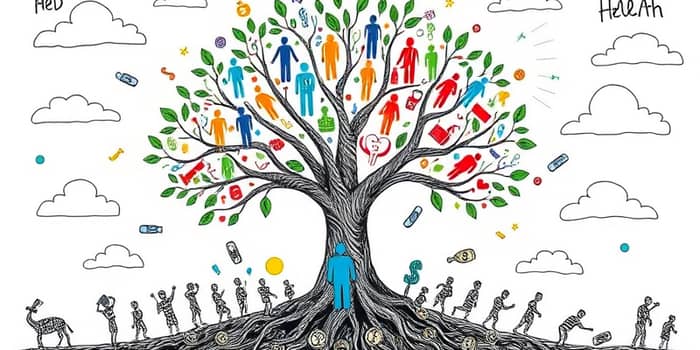
When we think about investing, our minds often drift to stocks, bonds, or real estate. Yet, one of the most powerful and underappreciated investments is right inside us: our health. By channeling resources into prevention and wellness, individuals and communities reap extraordinary long-term rewards that far exceed traditional financial assets.
Leading public health research reveals that every dollar spent on targeted interventions can yield multiple dollars in societal benefit. Imagine a world where each choice you make—from a daily walk to a childhood vaccination—acts like a high-yield bond for your body and mind.
The High ROI of Prevention
Public health departments and global agencies have meticulously tracked the returns on spending and found astonishing figures. Tobacco cessation programs can deliver $2–3 back for every dollar invested, while routine childhood immunizations generate $5–11 per dollar. In California alone, every public health dollar produced $67–88 in societal benefit.
These interventions share a common theme: they save lives, reduce long-term expenses, and foster resilience. When we prevent disease rather than chase cures, we unlock dramatic long-term benefits for individuals, families, and entire populations.
- Childhood vaccinations: $5–11 ROI and lifelong immunity
- Tobacco cessation: $2–3 ROI and reduced chronic disease
- Universal health coverage: up to $9 returned per $1 invested
Beyond the figures, every statistic represents a person spared suffering, a hospital bed freed, or a community strengthened. Prevention is the cornerstone of a sustainable health ecosystem.
Personal Health Investments
How can each of us harness this principle? At the individual level, simple choices stack up over time. Regular exercise, balanced nutrition, and stress management operate like low-cost interventions with high yields.
Consider the analogy of a retirement fund. Just as small monthly contributions grow through compound interest, daily health habits compound into exceptional lifelong outcomes. A ten-minute morning stretch might feel trivial, but over months and years, it enhances mobility, reduces injury risk, and boosts mood.
- Nutrition: Incorporate more fruits, vegetables, and whole grains.
- Movement: Aim for at least 150 minutes of moderate activity weekly.
- Mindfulness: Practice mindfulness or meditation for mental resilience.
- Preventive care: Schedule routine screenings and vaccinations.
By framing wellness as an investment, we shift from reactive spending to proactive stewardship of our greatest asset. Each healthy decision is akin to purchasing a fractional share in your future well-being.
Synergies Between Public and Personal Health
While personal choices matter, they gain power when supported by robust public health infrastructure. Community programs for smoking cessation, walking groups, or nutrition education magnify individual efforts. When insurers reward preventative measures and employers foster wellness cultures, everyone benefits.
These synergies illustrate how collective action all but transforms the landscape of disease prevention. A neighborhood with accessible parks and fresh food markets encourages all residents to adopt healthier habits, boosting the ROI of every personal investment.
Practical Steps to Maximize Your Health ROI
Transforming knowledge into action can feel daunting. Here’s a concise framework to guide your journey:
- Assess: Track your daily habits for a week to identify patterns.
- Plan: Set achievable health goals, such as two extra servings of vegetables per day.
- Partner: Join a community group or find an accountability buddy.
- Monitor: Use simple tools—journals or apps—to log progress.
- Adjust: Reassess quarterly and recalibrate your plan to keep momentum.
Over time, these incremental improvements not only enhance well-being but also reduce healthcare costs and lost productivity. It’s a virtuous cycle: healthier people require fewer medical interventions, freeing resources for deeper innovations.
Building a Healthier Future Together
The ultimate promise of health investment lies beyond individual returns. At the societal level, we see dramatic declines in mortality, soaring life expectancy in low-spending regions, and reduced burdens on healthcare systems. WHO estimates that expanding universal coverage and emergency preparedness yields an average of 8:1 ROI, saving millions of lives.
By advocating for smarter public spending alongside personal commitment, we create environments where everyone can thrive. Policies that tax unhealthy products, fund primary prevention, or integrate social services with healthcare amplify our collective impact.
It’s time to reframe health as a top-tier asset class—one that delivers both tangible monetary returns and the priceless gift of a longer, more vibrant life.
Conclusion: Your Health, Your Greatest Investment
Every dollar you allocate toward prevention, wellness, or supportive community programs is an investment in your future. By adopting daily habits, engaging in public health initiatives, and championing policies that foster well-being, you become both investor and beneficiary.
Start today by making one small change—perhaps a ten-minute walk or a new recipe rich in nutrients. Remember, small steps become great distances when taken consistently. Your health is the ultimate financial return, and the dividends last a lifetime.
References
- https://www.who.int/about/funding/invest-in-who/investment-case-2.0/triple-billion-targets
- https://ourworldindata.org/financing-healthcare
- https://www.kff.org/medicare/health-insurer-financial-performance/
- https://pmc.ncbi.nlm.nih.gov/articles/PMC10471881/
- https://gjia.georgetown.edu/2025/04/07/a-patient-centered-approach-to-improving-the-return-of-investment-in-us-healthcare/
- https://www.pwc.com/us/en/industries/health-industries/library/behind-the-numbers.html
- https://www.svb.com/trends-insights/reports/healthcare-investments-and-exits/
- https://www.oecd.org/en/topics/policy-issues/health-spending-and-financial-sustainability.html