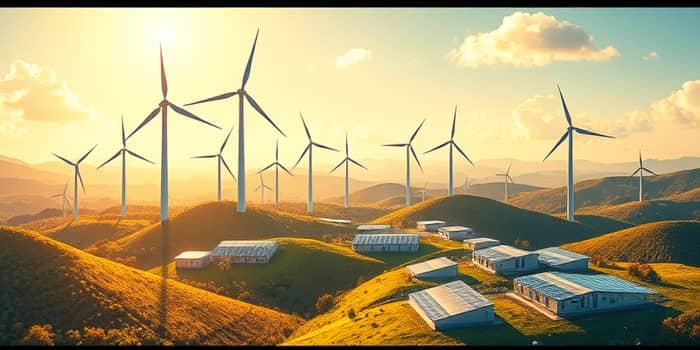
As the world accelerates toward a low-carbon future, investors are presented with a historic opportunity to generate strong financial returns while driving positive environmental impact. Renewable energy is no longer a niche market—it has become a powerhouse of growth, innovation, and sustainable profitability.
In this comprehensive guide, we explore the economic rationale, sector-specific prospects, driving forces, and practical steps to help you navigate the green investment landscape and unlock lasting value.
The Economic Imperative of Renewable Investment
Global clean energy investment surged to nearly USD 2.2 trillion in 2025, roughly double the amount directed toward fossil fuels. Meanwhile, total energy transition investment set a new benchmark at record USD 2.3 trillion, reflecting a deepening commitment to decarbonization.
Market forecasts project the renewable energy investment market to expand from USD 372.7 billion in 2026 to USD 523.3 billion by 2030, growing at a compound annual growth rate of 8.9%. This robust trajectory is underpinned by cost reductions, policy support, and surging demand for clean power.
Investors have already reaped the benefits: renewable assets delivered average annual returns of 15.7% over the past decade, significantly outpacing traditional energy investments. With two-thirds of every energy dollar now flowing into cleaner options, there has never been a more compelling moment to participate.
Unlocking Sector-Specific Opportunities
Renewable energy is a diverse field. Understanding the unique dynamics and investment levers within each segment is crucial for optimizing risk and reward.
- Solar Energy Leadership: Solar continues to dominate new capacity additions, accounting for almost 80% of global growth. Investment in utility-scale and rooftop solar is poised to hit USD 450 billion in 2025, with installations surpassing 500 GW AC.
- Battery Storage Momentum: Falling costs have propelled battery storage spending toward USD 66 billion in 2025. With U.S. operating storage capacity at 37.4 GW and a 187 GW pipeline by 2030, storage is the fastest bridge to reliable, 24/7 clean power.
- Wind Energy Expansion: Onshore wind will see cumulative additions rise 45% by 2030, while offshore wind is set to contribute an additional 140 GW of capacity. Wind investments remain a cornerstone of renewable portfolios.
Each sector presents distinct risk-return profiles. Solar offers scalability and near-term cash flows, storage provides resilience against intermittency, and wind delivers stable long-term generation streams.
Key Drivers Shaping the Landscape
Several interrelated forces are accelerating renewable deployment and investment:
- Cost Competitiveness Transformation: More than 90% of new renewable projects are now cheaper than fossil fuel alternatives, shifting capital toward renewables on pure economics.
- Surging Demand Trends: Hyperscale data centers and AI infrastructures are driving unprecedented power consumption, quadrupling U.S. electricity demand growth forecasts for 2026.
- Policy and Regulatory Momentum: Net zero mandates, renewable portfolio standards, and tax incentives such as safe-harbor provisions continue to underpin deployment timelines and investor confidence.
These forces are especially potent in Asia, where decarbonization goals and rapid urbanization are fueling private capital flows into distributed solar, mini-grids, and battery projects.
Navigating Risks and Challenges
Despite the overwhelmingly positive outlook, investors must remain vigilant to potential headwinds:
- Supply Chain Vulnerabilities: China’s dominance in solar manufacturing creates both cost advantages and geopolitical exposure, underscored by evolving foreign entity of concern rules.
- Permitting and Interconnection Delays: Lengthy approval processes and grid integration bottlenecks can extend project timelines and compress returns.
- Market Volatility: Growing renewable capacity sometimes triggers zero- and negative-price settlement events in wholesale power markets, highlighting the importance of flexible commercial structures.
Prudent investors balance these risks by diversifying across geographies, technologies, and contract types—such as hybrid power purchase agreements that combine solar, wind, and storage to capture upside while hedging downside.
Practical Steps for Aspiring Investors
To transform ambition into action, follow these strategic steps:
- Define Clear Investment Objectives: Are you seeking stable, long-term cash flows or high-growth development opportunities? Establishing your risk-return profile guides sector selection.
- Leverage Institutional Structures: Consider platforms such as yieldcos, green bonds, and renewable infrastructure funds to access diversified portfolios managed by experienced teams.
- Conduct Rigorous Due Diligence: Evaluate technology performance, counterpart creditworthiness, regulatory frameworks, and grid interconnection agreements to ensure robust project fundamentals.
- Engage with Expertise: Partner with advisors, project developers, and legal specialists to navigate complex permitting, incentive structures, and offtake negotiations.
- Monitor Policy Shifts: Stay informed on evolving tax credits, decarbonization targets, and supply chain regulations to anticipate market opportunities and disruptions.
By following these steps, investors can position themselves at the forefront of the transition, capturing strong returns while contributing to a healthier planet.
Embracing the Green Future
Renewable energy investing is more than a financial trend. It represents a paradigm shift in how we power our economies, secure our grids, and safeguard our planet. The trajectory is clear: clean energy will be the dominant force in global power markets by 2030.
For investors, the pathway to profitability lies in understanding the interplay of technological innovation, market dynamics, and policy catalysts. Armed with rigorous analysis, diversified strategies, and a commitment to sustainability, you can achieve competitive returns while making a meaningful impact.
The time to act is now. By channeling capital into solar farms, wind projects, battery storage, and emerging green technologies, you not only pursue enduring financial growth—you help to build a cleaner, more resilient energy system for generations to come.
References
- https://energytracker.asia/renewable-energy-investment-opportunities/
- https://rmi.org/the-energy-transition-in-2026-10-trends-to-watch/
- https://www.researchandmarkets.com/reports/5954630/renewable-energy-investment-market-report
- https://www.spglobal.com/energy/en/news-research/special-reports/energy-transition/horizons-top-cleantech-trends-2026
- https://www.deloitte.com/us/en/insights/industry/renewable-energy/renewable-energy-industry-outlook.html
- https://www.eia.gov/outlooks/steo/
- https://www.weforum.org/stories/2025/12/global-energy-2026-growth-resilience-and-competition/
- https://www.bdo.com/insights/industries/natural-resources/2026-natural-resources-energy-predictions
- https://earth.org/energy-transition-where-are-we-headed-in-2026/
- https://www.pwc.com/gx/en/services/deals/trends/energy-utilities-resources.html
- https://about.bnef.com/insights/finance/energy-transition-investment-trends/
- https://www.wri.org/insights/state-clean-energy-charted
- https://global.morningstar.com/en-nd/sustainable-investing/are-renewable-energy-stocks-buy-2026