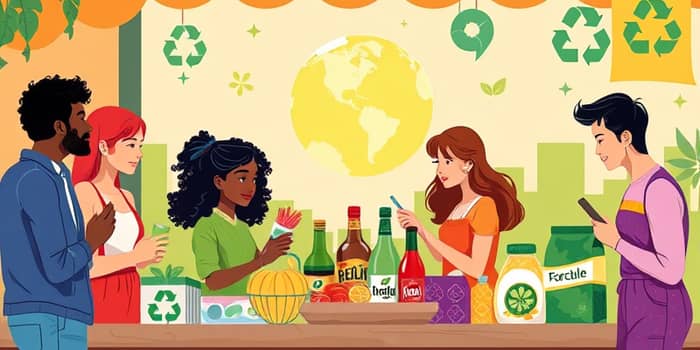
In today’s interconnected world, every purchase we make ripples across economies, societies, and ecosystems. Ethical consumption offers a transformative path: choosing products that honor people and planet. By spending with intention, consumers can become powerful agents of change.
Rooted in values like sustainability, animal welfare, fair labor, and social responsibility, ethical consumption goes beyond trends. It demands verifiable claims on sourcing and production and fosters accountability throughout supply chains. As more consumers demand transparency, brands must align profit with purpose.
Core Principles of Ethical Consumption
At its heart, ethical consumption rests on a few guiding pillars. Understanding these concepts empowers individuals to make informed choices and supports companies that prioritize people over profit.
- Environmental stewardship and reduced waste: Choosing products with minimal impact, recyclable packaging, and renewable materials.
- Animal welfare and cruelty-free practices: Supporting brands that ensure humane treatment and avoid unethical testing.
- Fair labor and social responsibility: Valuing workers’ rights, living wages, and safe working conditions in all production stages.
- Local support and community impact: Investing in businesses that uplift local economies and promote ethical supply chains.
Market Growth and Impact
Global demand for ethical products has soared. In 2025, Americans spent $230 billion on eco-friendly purchases, representing 24.8% of total retail spending. By 2032, this figure is projected to climb to $544 billion, capturing 34.4% of the market.
Meanwhile, the sustainable fashion sector is expected to surpass $11 billion by 2026, driven by younger generations prioritizing conscious wardrobe choices. Ethical consumerism as a whole is growing at a 12.8% CAGR, with a market value estimated at $9.0 billion today.
These figures illustrate a fundamental shift: consumers are no longer passive buyers. They are vocal advocates, rewarding brands that demonstrate genuine commitment to circular economy and responsible sourcing.
Understanding Consumer Attitudes
How do shoppers perceive ethical consumption? Surveys reveal a spectrum of motivations and concerns:
- 89% of global consumers have changed habits to be more eco-friendly in the past year.
- 72% prioritize environmental impact when selecting products.
- 50% increased eco-friendly purchases in just six months.
- 54% still prioritize affordability over sustainability, highlighting the cost barrier.
Trust and transparency remain critical. Approximately 57% of consumers doubt green claims, underscoring the importance of verifiable data and third-party certification.
Generational Differences in Ethical Spending
Age influences purchasing behavior. Younger cohorts often lead ethical market growth, while older generations gradually adapt.
Generation Z and Millennials not only demand sustainable labels but also research carbon footprints and packaging. Over 60% of younger consumers will pay more to align purchases with values.
Practical Strategies for Ethical Shoppers
Adopting ethical consumption need not be overwhelming. Simple steps can amplify impact and guide consistent choices.
- Research certifications like Fair Trade, B Corp, and organic labels to verify claims.
- Support brands with transparent supply chains and documented sustainability reports.
- Buy quality over quantity: invest in durable items that last, reducing waste and replacements.
- Choose second-hand or upcycled goods to participate in the circular economy and resource conservation.
By incorporating these habits, consumers reinforce market demand for responsible production, encouraging more businesses to adopt ethical practices.
Overcoming Common Challenges
Despite enthusiasm, barriers remain. Cost concerns deter 50% of consumers from eco-friendly options, while 16% find such products hard to locate. To overcome these hurdles:
- Plan purchases around sales or eco-friendly brand promotions to manage budgets.
- Use community swap events, thrift stores, and online marketplaces for accessible second-hand goods.
- Advocate for greater retail transparency and availability by voicing preferences at local businesses.
Emerging Trends and Future Directions
The ethical consumption landscape continues evolving. Several key trends to watch in 2026 and beyond include:
- Next-generation packaging innovations: edible, compostable, and dissolvable materials moving mainstream.
- Circular commerce platforms leveraging AI and blockchain for resale and upcycling.
- Regenerative agriculture and verified luxury supply chains prioritizing environmental restoration.
- Advanced personalization via 3D printing and IoT to reduce overproduction and waste.
Brands investing in recyclables and efficiency have tripled sustainability reporting since 2016. As technology democratizes production, ethical options will become more affordable and ubiquitous.
Conclusion: Building a Purposeful Future
Ethical consumption is more than a trend—it’s a global movement reshaping marketplaces, empowering communities, and safeguarding ecosystems. By aligning purchases with deeply held values, consumers drive systemic change.
Every product choice is an opportunity: to uplift workers, protect wildlife, and mitigate climate impacts. As awareness grows and technologies advance, ethical consumption will move from niche to norm, fostering a more resilient and just world.
Join the journey. Spend with purpose and be the catalyst for positive change.
References
- https://capitaloneshopping.com/research/eco-conscious-consumer-statistics/
- https://www.itonics-innovation.com/consumer-goods-trends
- https://www.statista.com/chart/32365/us-respondents-on-sustainable-ecological-consumption/
- https://www.graygroupintl.com/blog/sustainable-fashion-2026/
- https://www.arbor.eco/blog/sustainability-statistics
- https://www.inriver.com/resources/do-consumers-care-about-sustainability/
- https://cda.academy/ethical-and-sustainable-marketing-trends-2026/
- https://www.spglobal.com/sustainable1/en/insights/2026-sustainability-trends
- https://www.salsify.com/blog/top-10-consumer-trends-to-watch
- https://www.htfmarketinsights.com/report/4391533-ethical-consumerism-market
- https://www.youtube.com/watch?v=R-bL5kJgTL4
- https://www.ethicalconsumer.org/climate-gap-report