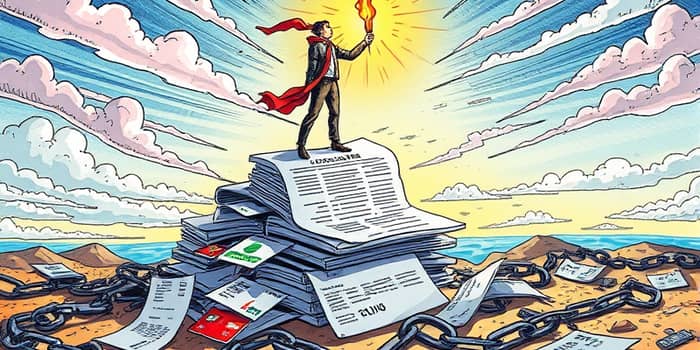
American households collectively face a historic debt mountain, with balances reaching record $18.59 trillion debt in late 2025. As financial stress climbs, reducing debt has become the top priority for millions of consumers nationwide.
With the average individual carrying over $104,000 in obligations, navigating this landscape demands clarity, discipline, and the right approach. This guide offers a comprehensive roadmap to understanding current trends and implementing proven strategies for lasting financial freedom.
Understanding the Current Debt Landscape
Household debt in the United States surged to unprecedented levels in 2025, driven largely by mortgages, auto loans, and rising home equity lines of credit. While student loan balances have dipped significantly thanks to one-time discharge programs, other categories continue to climb.
A closer look reveals stark geographic disparities, with states like Colorado averaging $155,000 in consumer debt per household, compared to West Virginia’s more modest $63,000. Credit card balances, meanwhile, rose by 0.5% over the past year, signaling ongoing reliance on plastic to bridge income shortfalls.
Three Pillars of Debt Elimination
Choosing the right approach begins with understanding the core methods that have empowered countless borrowers to regain control:
- Debt Avalanche Method: Focus payments on the highest-interest balances while making minimum payments on all other accounts.
- Debt Snowball Method: Attack the smallest debts first to gain psychological momentum through quick wins.
- Debt Consolidation and Transfers: Combine multiple debts under a single loan or a 0% APR credit card promotion to simplify repayment.
While both avalanche and snowball approaches have proven track records, consolidation tools in 2025 feature longer promotional periods and lower rates than ever before. However, successful use of these methods depends on avoiding common traps and adopting systematic payment methods that align with your personality.
Interest Rate Environment and Its Impact
After months of stability, the Federal Reserve trimmed key borrowing rates by 0.25% in September 2025. Although modest, this cut led to slightly lower auto loan and personal loan rates, offering a window of opportunity for refinancing existing balances.
Extended 0% APR offers now stretch up to 24 months, enabling borrowers to transfer high-interest credit card debt and focus entirely on principal reduction. To maximize savings, it’s essential to qualify for cards with the longest promotional periods and pay off balances before promotional rates end.
Psychological Factors and Common Pitfalls
Behavioral science shows that debt reduction is as much a mental challenge as a financial one. Borrowers who tackle smaller balances first often avoid feeling overwhelmed, while those who see immediate progress stay motivated longer.
Yet many plans derail due to simple yet devastating errors:
- Taking on new debt while paying down existing loans
- Using consolidation without addressing underlying spending behaviors
- Failing to maintain at least a small emergency fund
- Ignoring the psychological triggers that led to overspending
Experts recommend combining aggressive payoff tactics with maintaining an emergency fund of even a few hundred dollars. This cushion prevents unexpected expenses from forcing you back into high-interest borrowing.
Special Focus: Student Loans and Credit Card Debt
Student loan debt, while decreasing overall, still stands at $1.65 trillion with nearly 10% of borrowers in serious delinquency. Federal forbearance and discharge programs have offered relief, but many graduates struggle without clear repayment strategies.
For credit card debt clocks ticking with average balances rising to $7,321, balance transfers and targeted consolidation loans can be lifesavers. Moving plastic balances onto promotional cards reduces interest accrual, but discipline is key: avoid new purchases and aim to eliminate transferred balances entirely within the 0% APR window.
Professional Support and Implementation Roadmap
When self-management feels overwhelming, nonprofit credit counseling agencies provide structured plans and guidance at minimal cost. Bankruptcy remains a last resort due to its severe credit score impacts, but for some, it represents the clearest path to a fresh start.
To translate knowledge into action, follow a clear, step-by-step roadmap:
- Assess all debts and interest rates to prioritize high-cost obligations.
- Create a realistic budget that frees up extra money for debt repayment.
- Select the strategy (avalanche, snowball, consolidation) that matches your goals.
- Set up automated payments to ensure you never miss deadlines.
- Maintain an emergency fund to avoid new debt traps.
- Regularly review and adjust your plan, meticulously track your progress, and celebrate milestones.
By combining these elements—minimize total interest paid and disciplined execution—you’ll accelerate your journey toward financial independence.
The road to debt freedom may feel steep, but hundreds of thousands of Americans have successfully demolished their liabilities by following these principles. Start today, stay persistent, and watch as each payment brings you one step closer to a future unburdened by loans.
References
- https://www.jgwentworth.com/resources/3-biggest-strategies-for-paying-down-debt
- https://www.experian.com/blogs/ask-experian/research/consumer-debt-study/
- https://ncri.com/top-10-strategies-for-effective-debt-collection-in-2025/
- https://www.newyorkfed.org/newsevents/news/research/2025/20251105
- https://www.westernsouthern.com/personal-finance/managing-debt
- https://abcnews.go.com/Business/americans-household-debt-hits-new-record-high-report/story?id=127221208
- https://extension.wvu.edu/youth-family/finances/blog/2025/04/01/smart-strategies-for-effective-debt-management
- https://www.foxbusiness.com/economy/us-household-debt-hits-new-record-ny-fed-finds
- https://dfpi.ca.gov/news/insights/three-steps-to-managing-and-getting-out-of-debt/
- https://www.newyorkfed.org/microeconomics/hhdc
- https://bridgeforce.com/insights/debt-collection-trends-reshaping-2025-strategies/
- https://www.lendingtree.com/credit-cards/study/credit-card-debt-statistics/
- https://www.cfp.net/news/2024/12/reducing-debt-is-americans-no-1-financial-priority-for-2025-cfp-board-research-finds
- https://www.federalreserve.gov/releases/g19/current/
- https://blog.harvardfcu.org/how-to-stay-financially-healthy-tips-for-managing-debt-in-2025