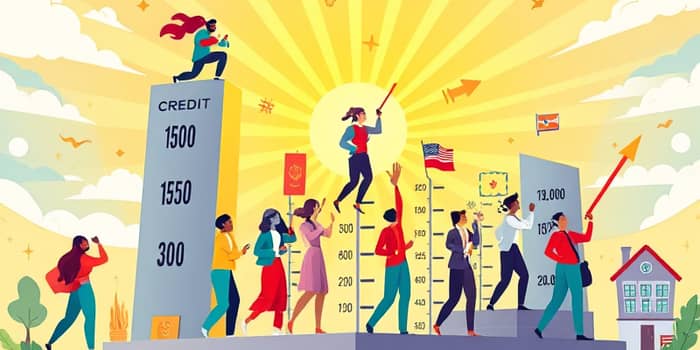
Every dream—from owning a home to launching a business—hinges on one often overlooked figure: your credit score. This invisible number can either open the door to opportunity or keep it firmly closed. Understanding and mastering this score is the first step toward unlocking financial freedom and trust.
By learning the forces that shape your score, you can transform your financial story and seize every chance to grow and prosper.
Understanding Your Credit Score
A credit score is a numerical representation of creditworthiness, typically ranging from 300 to 850. It predicts your likelihood to repay loans on time, serving as a beacon for lenders, insurance companies, and even rental agencies.
When you apply for a mortgage, auto loan, or credit card, this three-digit figure becomes a primary assessment tool. A high score signals responsibility and reliability, while a low score can suggest risk and uncertainty.
The Five Pillars of Creditworthiness
The most widely used model, the FICO score, breaks your credit behavior into five key components. Each pillar carries a different weight, collectively shaping your overall score.
Payment History is your single most influential factor, reflecting on-time payments and public records like bankruptcies or liens.
Amounts Owed evaluates your credit utilization ratio—the share of available credit you’re using. Maintaining low credit utilization rates shows you’re managing debt responsibly.
Length of Credit History rewards those with long-standing accounts, demonstrating sustained financial stewardship over time.
Types of Credit in Use values variety—having a mix of credit cards, installment loans, and mortgages can enhance your profile by showing versatility.
New Credit tracks recent inquiries and account openings; frequent applications can signal risk and temporarily lower your score.
Why Your Credit Score Matters
Your score’s impact extends far beyond loan approvals. It directly influences the interest rates offered, the loan amounts you can access, and the repayment terms you receive. A high score means lower interest rates and greater flexibility, saving you thousands over time.
- Poor: Below 580
- Fair: 580 to 669
- Good: 670 to 739
- Very Good: 740 to 799
- Excellent: 800 and above
Borrowers in the “Good” or “Excellent” ranges often qualify for premium credit cards, favorable mortgage rates, and competitive auto loans. Conversely, lower scores can lead to denial, high rates, or the need for a co-signer.
Strategies to Improve Your Score
Improving your credit score is an empowering journey—one that combines patience, discipline, and smart tactics. Start by creating a plan focused on these fundamental actions:
- Always pay bills on time; set up automatic reminders.
- Reduce outstanding balances to keep utilization under 30%.
- Avoid opening multiple new accounts in a short period.
- Maintain a diverse credit mix, blending installment and revolving accounts.
- Regularly review your credit report to dispute errors promptly.
By executing these steps consistently, you’ll see gradual but meaningful improvements. Remember, steady progress over time outweighs quick fixes.
Maintaining and Growing Your Borrowing Power
Achieving a strong credit score is a milestone, but sustaining and enhancing it is an ongoing commitment. Cultivate habits that reinforce financial health:
First, monitor your credit reports monthly to catch inaccuracies before they damage your profile. Credit bureaus allow one free report annually, and various services offer real-time alerts.
Second, establish an emergency fund to avoid relying on credit for unexpected expenses. When you can cover surprises with cash savings, you prevent last-minute high balances and late payments.
Third, negotiate with lenders. If you’ve proven responsible, ask for higher credit limits or better rates. A small rate reduction or limit increase can improve your utilization ratio and reduce costs.
Finally, view credit as a tool, not a crutch. Always borrow within your means, and align your credit use with clear goals—whether that’s home ownership, entrepreneurship, or simply peace of mind.
Empower Your Financial Journey
Your credit score is more than a number; it tells the story of your financial choices and potential. By understanding its mechanics, embracing strategic actions, and nurturing healthy money habits, you can dramatically boost your borrowing power and confidence.
Imagine the doors that will open when you stand before lenders with a stellar score—reduced interest, flexible terms, and the freedom to pursue dreams unburdened by financial barriers. Start today. The path to long-term financial success awaits.
References
- https://mycreditunion.gov/manage-your-money/credit/credit-scores
- https://www.funding.com.au/blog/understanding-the-impact-of-credit-score-on-your-borrowing-power/
- https://www.myfico.com/credit-education/whats-in-your-credit-score
- https://www.sccu.com/articles/personal-finance/how-credit-score-can-impact-purchasing-power
- https://www.finra.org/investors/personal-finance/how-your-credit-score-impacts-your-financial-future
- https://www.caccu.org/how-does-my-credit-score-affect-getting-a-loan/
- https://www.consumerfinance.gov/ask-cfpb/what-is-a-credit-score-en-315/
- https://www.levo.org/education-blog/how-your-credit-score-affects-your-borrowing-power
- https://consumer.ftc.gov/credit-scores
- https://www.nchfa.com/news/home-matters-blog/how-your-credit-score-impacts-your-home-buying-journey
- https://www.unitedway.org/understanding-your-credit-score
- https://barnumfinancialgroup.com/the-power-of-a-good-credit-score/
- https://www.experian.com/blogs/ask-experian/credit-education/score-basics/what-affects-your-credit-scores/
- https://www.discover.com/credit-cards/card-smarts/how-is-credit-score-calculated/