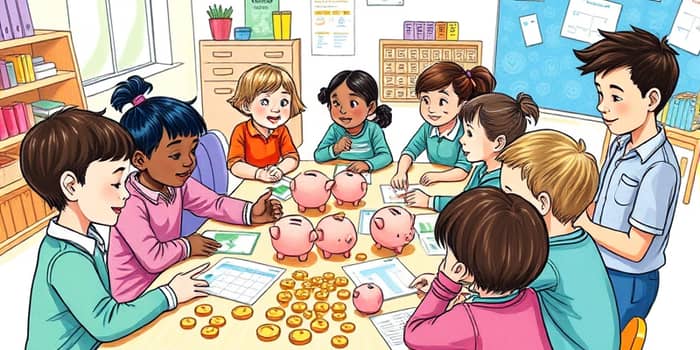
Financial literacy is no longer a luxury; it is a vital skill that young people need to navigate an increasingly complex economic world. By equipping children with the tools to understand budgeting, saving, and investing, we empower them to build confidence and secure futures.
Current Landscape of Financial Education
The emphasis on personal finance in schools has grown rapidly. As of 2025, 45% of high schoolers nationwide have enrolled in a personal finance or financial literacy course, a sharp increase from just 31% the previous year. Gen Z leads this trend, with 35% having completed a course, compared to 24% of millennials and only 10% of baby boomers.
At the state level, 29 states now guarantee a standalone personal finance course for all public high school students. Yet only 10 of those have fully implemented youth financial education, while 17 remain in progress. Utah and Virginia serve as benchmarks, boasting 100% student access to comprehensive programs. In contrast, California, Nevada, and Delaware lag significantly, with access rates below 7% despite mandated requirements.
These disparities highlight the uneven progress across the nation. California plans to improve standards by 2031, and advocates hope other low-performing states will follow suit. Until then, millions of students remain without formal instruction in the principles that underlie sound money management.
Knowledge Gaps and Student Attitudes
Even when courses exist, persistent misconceptions undermine young learners’ confidence. Educators report that many teens enter class with incomplete or incorrect beliefs about finance.
- 68% of teens believe saving for retirement can wait until later
- 43% think an 18% interest rate is easily manageable
- 80% have never heard of FICO credit scores or understand their purpose
These misunderstandings coincide with mental health implications are substantial. Nearly 42% of teens report feeling terrified about their future finances, and one in three adults states they experience financial stress often. Without early intervention, these anxieties can intensify as expenses grow in college and beyond.
Course Effectiveness and Adult Perspectives
Students who complete financial literacy classes often praise their impact—64% find the coursework very or extremely helpful. Yet evidence suggests a disconnect between positive perceptions and lasting knowledge retention. Tim Greinert, President of Junior Achievement USA, emphasizes the need for evidence-based approaches to learning that move beyond simple online modules.
Adults who reflect on their high school experiences underscore this gap. Nearly 80% agree they would have made fewer money mistakes and felt less stress if they had received more comprehensive instruction in personal finance during their teenage years. Those who did take a high school course are five times more likely to feel prepared for real-world money management.
Public Support and Policy Momentum
Financial education enjoys rare bipartisan backing. Seventy-five percent of Democrats and Republicans alike rank economics and personal finance as essential coursework. Independent voters echo this sentiment at 77%. Moreover, 48% of parents call for increased funding to expand financial literacy initiatives.
Despite widespread support, only 15% of young people cite school as their primary source for learning about money. Meanwhile, family influence remains dominant, suggesting that formal education must partner with parents to reinforce key concepts at home.
Beyond the Classroom: Ripple Effects
Financial education extends its benefits beyond the student. Studies show that parents of children enrolled in these programs experience a 26% decrease in the probability of falling behind on bills and a 5% average increase in credit scores. Such outcomes illustrate a powerful ripple effect of financial responsibility that strengthens entire households.
Where Teens Learn Outside School
Informal education remains critical. Family members lead as the primary teachers of money management for 38% of young people, while only 15% credit school curricula. Community programs, online resources, and youth employment also play important supporting roles in shaping financial habits.
Practical Strategies for Teaching Kids
To turn awareness into action, parents and educators can adopt engaging tactics that resonate with young learners. Consider these proven methods:
- Establish a regular allowance tied to simple chores, reinforcing the link between effort and reward
- Encourage goal-oriented savings jars or digital accounts for specific purchases or causes
- Play budgeting games or apps that simulate real-world spending and saving scenarios
- Introduce basic investing concepts through child-friendly brokerage platforms or mock portfolios
- Discuss family budgeting decisions openly, inviting teens to contribute ideas and questions
Such hands-on learning experiences for kids foster lasting habits by making abstract concepts tangible and relevant.
Future Imperatives
The momentum behind youth financial literacy is undeniable, but translating policy into practice remains a challenge. Education leaders must prioritize curriculum quality, integrate real-life scenarios, and leverage community partnerships. Policymakers can accelerate progress by allocating dedicated funding and setting clear implementation milestones.
Ultimately, financial education is not a one-time lesson but a lifelong journey. By blending classroom instruction with familial support and practical exercises, we can help the next generation gain the confidence to pursue their dreams with fiscal responsibility.
By weaving financial literacy into every aspect of a young person’s life, from classrooms and homes to community programs, we can plant the seeds for a more empowered, economically secure generation.
References
- https://jausa.ja.org/news/press-releases/more-teens-are-participating-in-financial-literacy-courses-but-gaps-in-learning-evident-according-to-new-survey
- https://petersenhastings.com/the-financial-literacy-crisis-in-america-2025-report/
- https://www.intuit.com/blog/global-stories/financial-literacy-ranking-by-state/
- https://www.aba.com/about-us/press-room/press-releases/new-survey-americans-support-financial-education-in-schools
- https://www.weforum.org/stories/2025/07/financial-education-students-to-parents/
- https://www.nefe.org/news/2025/10/poll-financial-education-considered-an-essential-subject.aspx
- https://www.thenationsreportcard.org
- https://www.aecf.org/resources/2025-kids-count-data-book